Whenever I crave a bit of showing off, I share a very simple fact about me – I speak 5 different languages.
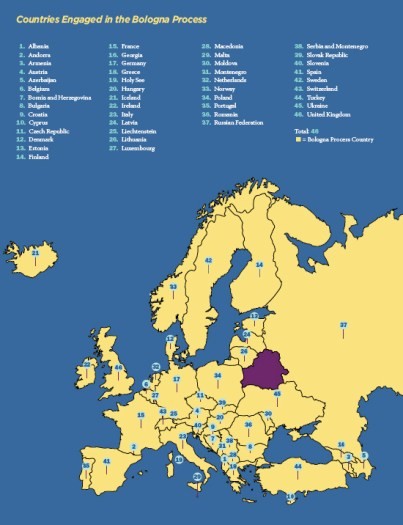
OK, two of them are my native ones, Russian and Belarusian, so I can’t really take credit for them. I just happened to be born and raised in a bilingual country. I do take credit for speaking English, German and Romanian. Whenever I mention the latter, eyebrows are raised and more questions follow (which is a good conversation starter, by the way), and when that happens, I just continue telling the truth – I have some Romanian ancestry, so it was important for me to learn the language my great-grandparents used to speak. I am yet to pay the same tribute to Latvian, though.
If you are yet to get used to English (or any new language, for that matter), I happen to have a few pointers for you based on what has worked for me.
How do you even know if you have achieved proficiency in English?
Apart from formal exams, there aren’t any particular checkboxes you need to tick off to claim being proficient in English. My personal top three signs, though, are:
- You don’t just speak the language – you think in that language! And/ or perhaps talk to yourself using your adopted language instead of the native one.
- When you are furious or annoyed, you naturally swear in your new language. Despite confusing my boyfriend a few times with a loud ‘Blyat!’ or ‘Pizdets!’ exclamation of frustration, I mostly use the f-word in different combinations these days.
- And my personal favourite – sort of a writing on the wall for your native language – you start dreaming in your new language. If your subconscious has fully embraced English, you’re good.
My top tips for achieving proficiency
Spoiler alert – I don’t have any magic bullets for you. Getting fully comfortable with a foreign language takes time and efforts, no shortcuts here. There are, however, a few things I found to be most helpful, so let’s take a look at them:
- Surround yourself with the language (and be prepared to succumb to it!) Change your Netflix settings to English. Listen to songs in the language you want to master. (If it wasn’t for me falling in love with the boy band Five when I was 11, this post would have probably never come to life) Read books and articles in that language, including the news. The more you expose yourself to English, the quicker you embrace it.
- Talk to native speakers. I know this can be daunting. I know you are terrified of making mistakes. Think of each conversation you have with a native as a small victory. Think of a smart word you have learned and see if you can fit it into the context. (I am still super-proud of myself for using the word ‘Geschwindigkeitsbegrenzung’ – ‘speed limit’ – when talking to a stranger on a bus from Munich to Frankfurt!) Offer help to a native speaker if you spot one – they won’t dare to be ruthless to you for making mistakes! Or, if you are a party animal, try to see if you can find a native speaker willing to talk to you at a fun gathering! My command of Romanian probably peaked at a New Year’s party in Istanbul where a lady from Romania was impressed with the sheer fact that I could speak her native language.
- Translate things you hear and think about in your target language in your mind. The key difference between knowing a language and mastering it is that, when you get to the latter stage, you THINK in that language, instead of translating stuff from your native one to the target one. But you can’t achieve proficiency unless you successfully practise the ‘translation mode’ a million times in your mind and make it a routine for your brain. At some point, it will naturally transform into thinking in your new language straight away.
- Make it fun for yourself. Write down newly learnt words in a cute notebook. Find some apps for your phone that would make it fun – and easy for you to practice. (The trick here is that you are on your phone most of the time anyway, so you don’t get an excuse of not having a textbook at you.) If you are tech-savvy, make ChatGPT your personal tutor in a new language. (and check out this article with helpful tips) Speaking of AI, how about writing down a list of things you find to be fun and asking ChatGPT about ways to combine these with learning a language?
Like I mentioned before, getting to proficiency in a new language will take time. You might as well make that process enjoyable and empowering for you. There’s a limit to how much grind a human being can take.
So, you never struggle with English then?
Oh hell, no. Learning a language is a never-ending process. It’s like the horizon – as you move towards it, you progress but never reach it.
And let’s face it, English is not easy to learn! There is no ham in hamburgers, and pineapples have nothing to do with either pines or apples. Mangetout is pronounced ridiculously, and my boyfriend almost peed himself when he heard me saying it as ‘manjetoat’.
The one thing I completely fail at is fighting in English. I somehow lose half of my vocabulary in the heat of emotions and have to make do with the leftovers. Whether it’s a small fight at home about my partner not washing the dishes or a bigger one with a Ryanair customer service agent at the Dublin airport, I do struggle. (Bold of that lady talking down at me to even refer to herself as someone working in customer service, more like customer disservice…)
Makes me wonder if in situations like this I should just switch to Russian and sound like DiCaprio in this video?
How language changes identity
There have been numerous studies suggesting that multilinguals wear different hats depending on the language they use at any given moment. My personal experience definitely echoes those studies.
Both my ex and my current partner pointed it out to me that my voice sounds completely different depending on which language I speak, saying ‘it’s as if a completely different person starts speaking!’ When you communicate in English, especially in Britain, you are expected to sound polite, diplomatic and averting confrontation. Russian-speakers tend to be more blunt, straightforward and – to a point- aggressive. German, on the other hand, contrary to popular belief, sounds extraordinarily poetic (how come so few people notice it?!), but at the same time, it is very organised and disciplined. This is why I always listen to Rammstein when working on an assignment that requires 100% focus or the morning before an exam.
This is the beauty of learning a foreign language. You get to experience yourself as a different personality, open the doors for other people in your life, get to explore something that would be impossible or at least very difficult if you had that language barrier. There’s a Czech proverb saying ‘The more languages you know, the more you are a human being’. I couldn’t agree more!




 Minsk to Mist
Leave a reply to Something lost, something gained, or How moving abroad changes you forever – Minsk to Mist Cancel reply